For most of my career, I’ve played a very simple role:
Someone calls me and says:
“Do you know someone who can do this?”
And I try to find the answer.
Sometimes it’s:
- an MSB-friendly bank account
- an MTL sponsor
- EMI or PI access
- a crypto on/off-ramp
- a payout partner in a specific corridor
- a compliance firm that actually understands the business
And sometimes it’s something even more specific.
I’ve always operated in a fairly narrow area of expertise — cross-border payments, banking, licensing, and fintech infrastructure. But over time, something interesting started happening.
More and more people started reaching out.
Not just for what I specialize in, but for adjacent problems. And then adjacent to those. And then even further out.
At some point, I realized:
I wasn’t just solving problems anymore. I was acting as a market maker.
People came to me because they trusted that:
- I understood the space
- I knew who the real operators were
- I could connect them to someone who could actually get things done
And for a long time, that worked.
The Problem I Couldn’t Ignore
But there was always a limitation.
I could only handle so much.
And more importantly:
Most of the opportunities I saw never went anywhere.
Not because they weren’t real.
But because:
- they didn’t fit exactly into my immediate focus
- I didn’t have the right contact readily available
- timing didn’t work
- or they just got lost in the flow of emails, messages, and calls
Over the years, I saw this happen again and again.
Real demand. Real providers. No structured way to connect them.
And I kept thinking:
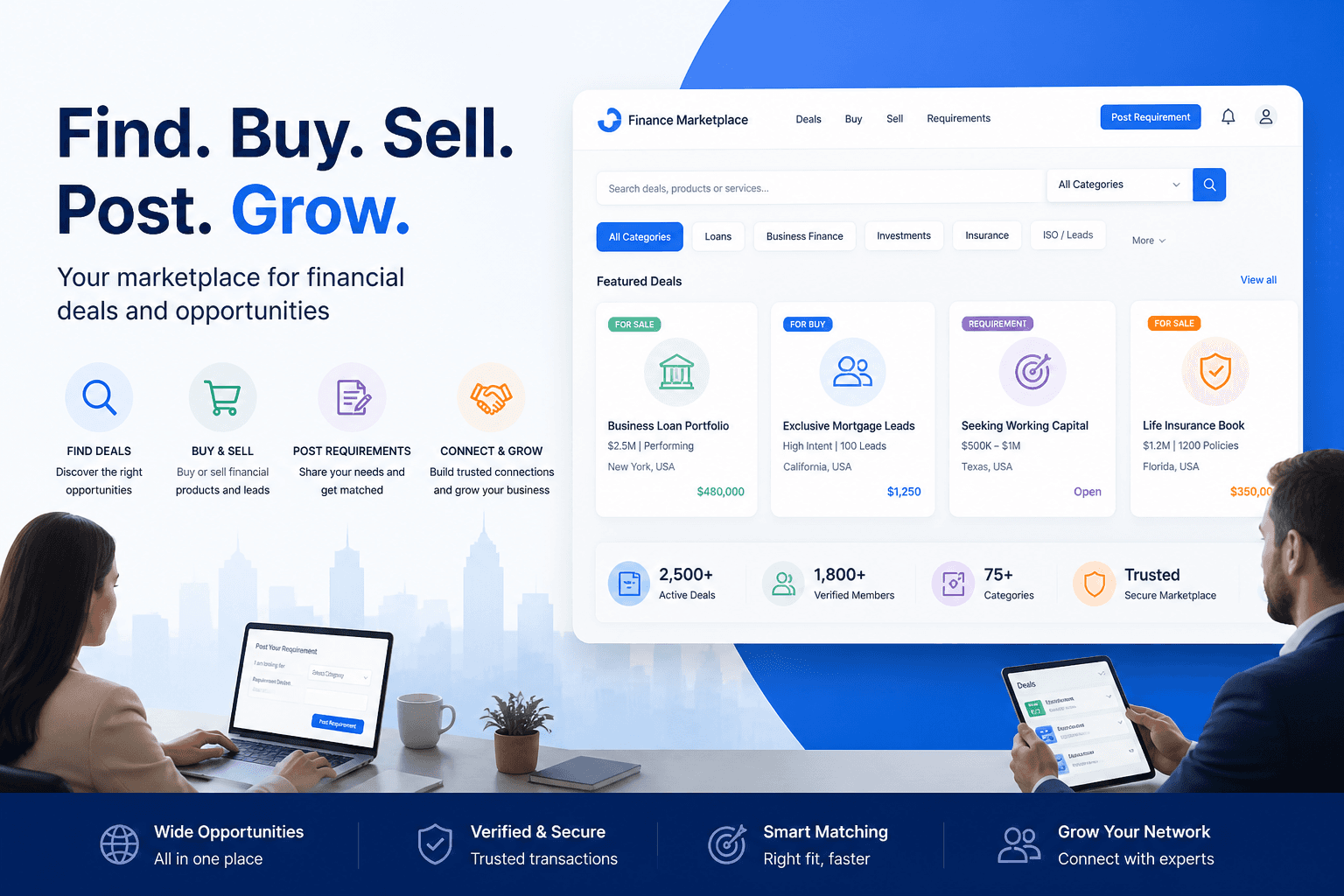
There should be a marketplace for this.
Not a generic marketplace. Not a directory. Not a lead-generation site.
Something specific to regulated financial services.
Something where:
- serious companies could post real requirements
- serious providers could respond
- and the entire interaction would be structured
That idea sat in my head for more than a decade.
Why It Took So Long
The honest answer is simple.
Building a marketplace is not easy.
It’s not just about having the idea. You need:
- technical capability
- infrastructure
- systems
- time
And for a long time, I didn’t have that.
So I kept doing what I always did:
- taking calls
- making introductions
- solving problems one by one
But the underlying inefficiency never went away.
Why Now
At some point, I stopped asking:
“Why hasn’t someone built this?”
And started asking:
“Why haven’t I built this?”
I already had:
- deal flow
- relationships
- reputation
- pattern recognition
The only missing piece was structure.
That’s where DealHarbor comes in.
What DealHarbor Is
DealHarbor is a way to take something that has always existed informally — and make it structured.
It’s a marketplace for:
- banking access
- licensing
- payments
- crypto infrastructure
- compliance
- FX and cross-border corridors
- trade finance
- and even fintech M&A
Companies can post what they need.
Providers can respond if they are relevant.
There are:
- no success fees
- no revenue sharing
- no transaction markups
DealHarbor doesn’t sit in the middle of deals.
It simply creates:
structured access to opportunities that previously existed in private networks.
What It’s Not
It’s not a free-for-all.
It’s not open to everyone.
It’s not designed for volume.
Because in this space, volume is noise.
What matters is:
- relevance
- credibility
- intent
Where This Is Going
Right now, DealHarbor is in its early phase.
We’re onboarding providers carefully.
We’re structuring opportunities selectively.
Over time, the goal is simple:
Make it easier for the right people to find each other.
Nothing more.
Nothing less.
Final Thought
For years, people have come to me with problems.
DealHarbor is my way of making sure fewer of those problems go unsolved.